Showing posts with label Kenya. Show all posts

Saturday, 22 February 2020

Amboseli National Park

Monday the 17th Feb, we left Lake Elementaita to travel to Amboseli National Park. We were
up bright and early, after breakfast we hit the road.  The drive being approximately 6 hours.
We travelled again through the Rift Valley, a different way to what we first came, then  onto Nairobi for lunch.
We travelled mainly on tarred roads and had just 28kms of dirt road, believe me these roads are not pleasant with large potholes. The traffic and rules on the road leave a lot to be desired as well with an only two line highway, and so many trucks, the traffic is bedlam as well as overtaking onto oncoming traffic was quite alarming.
We did see quite a few trucks on their sides, tipped over due to the sharp decline on the verge.
 We arrived into Nairobi at 1130hrs, safari vehicle was filled with diesel and we had lunch in a nice hotel. Security is everywhere, you need to go through guards, be scanned for weapons and boom gates to enter and you are checked at the door, as well as your hand luggage.
 After a pleasant lunch we set off again to travel due south. After a full day of travelling we arrived into the park at 6.30pm. Checked into our glamping style accomodation, ready for a few drinks.
We will stay here for two nights and will do a full day game drive tomorrow, having a packed lunch in the park.

 Raffertys rules on the road
 A large amount of trucks coming from Uganda
 They all have pertinent names on their trucks, the buses are also very colourful.

We saw a few funny sights on our road trip to Amboseli.
 Our glamping style accomodation, Sentrim Amboseli.
 Our room with full amenities
 Inside our room
Time for a few drinks.
 In the morning we were taken on an escorted walk to the viewing point for Mt Kilimanjaro
 DH and I enjoyed the sight, a lovely setting.


Debra and Tony from Rockhampton, our travelling buddies.

The viewing point.
 Crown primrose birds
 Flamingos
 The dirt tracks getting to the parks. (Main roads)
 This is some of the roads we travelled, very rough.
 Baboons on the road.
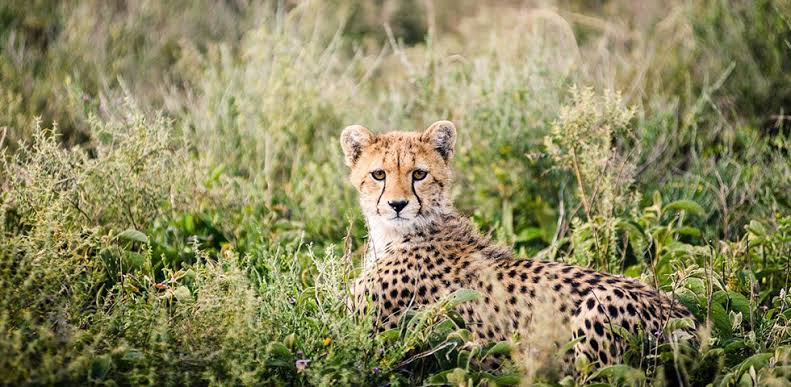
There are two cheetahs in the grass, our first sighting.
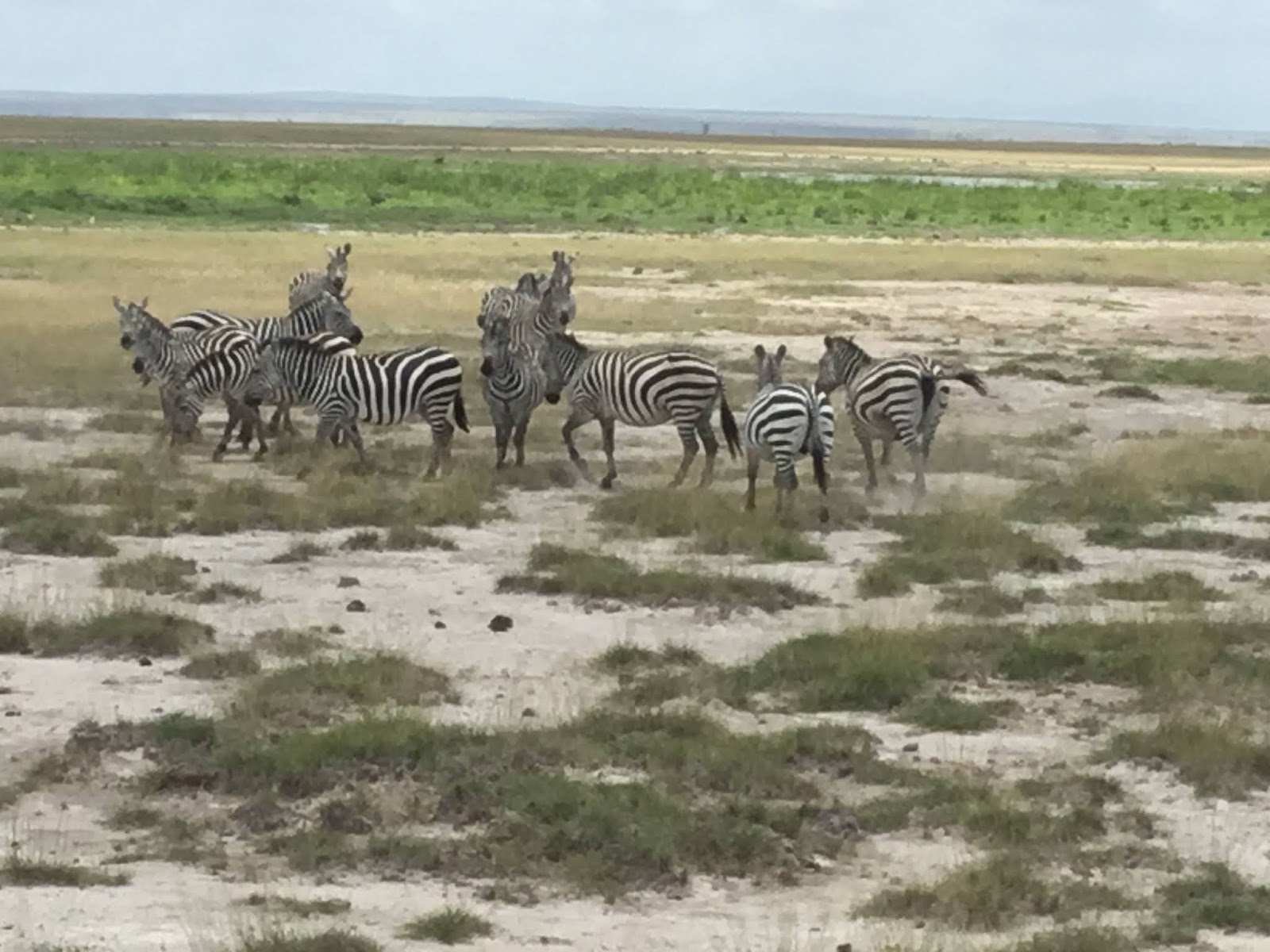
 Zebras, quite a few with foal.
 The water ways, lots of birds and flamingos
 Gazelle on side of the road.
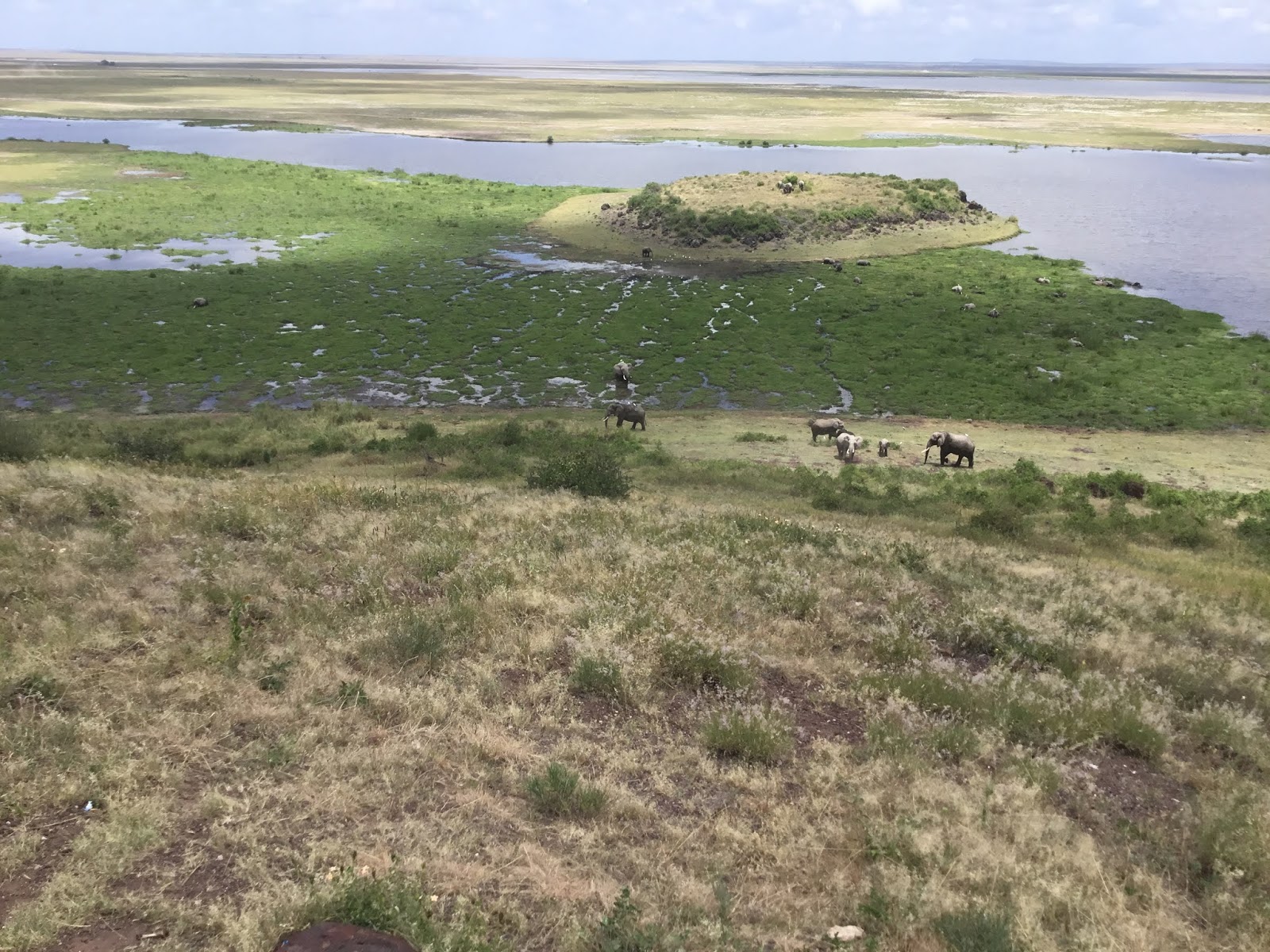
Observeration Hill, where we will have lunch, this is where the elephants live.
 We had a morning tea stop here at Oltuka Lodge in the middle of the park

 Great african artifacts

 DH near the bar we only had coffee.
 We felt like royalty, this lodge was lovely, but we had the best view of Mount Kilimanjaro.
 Madam Muck.
 Photo opportunity with a Masai warrior, they are the loveliest people, so gentle.

Keeping the grass under control with machetes, hard work, this is how they also keep down the grass along the highways, no whipper snippets or tractor mowers, we were told this keeps quite a few people employed, boy their arms must get sore.
Let me share some facts about Amboseli National Park.
Amboseli National Park is 392sqkm, and has a clear sight of Mt Kilimanjaro, Africa’s highest mountain at 5896m. The waters of the mountain feed the seasonal swamps and marshes on which the game and birds that live in the park rely.
Mount Kilimanjaro is nearly always snow capped. The park takes its name from the seasonal lake, Amboseli, which in dry weather resembles a massive salt pan. In recent years it has become world famous as the home of herds of elephants, which lived here in comparative safety throughout the times of intense poaching during the 1980’s and early 1990’s.
The large herds of elephants can most often be found in the permanent swamps.
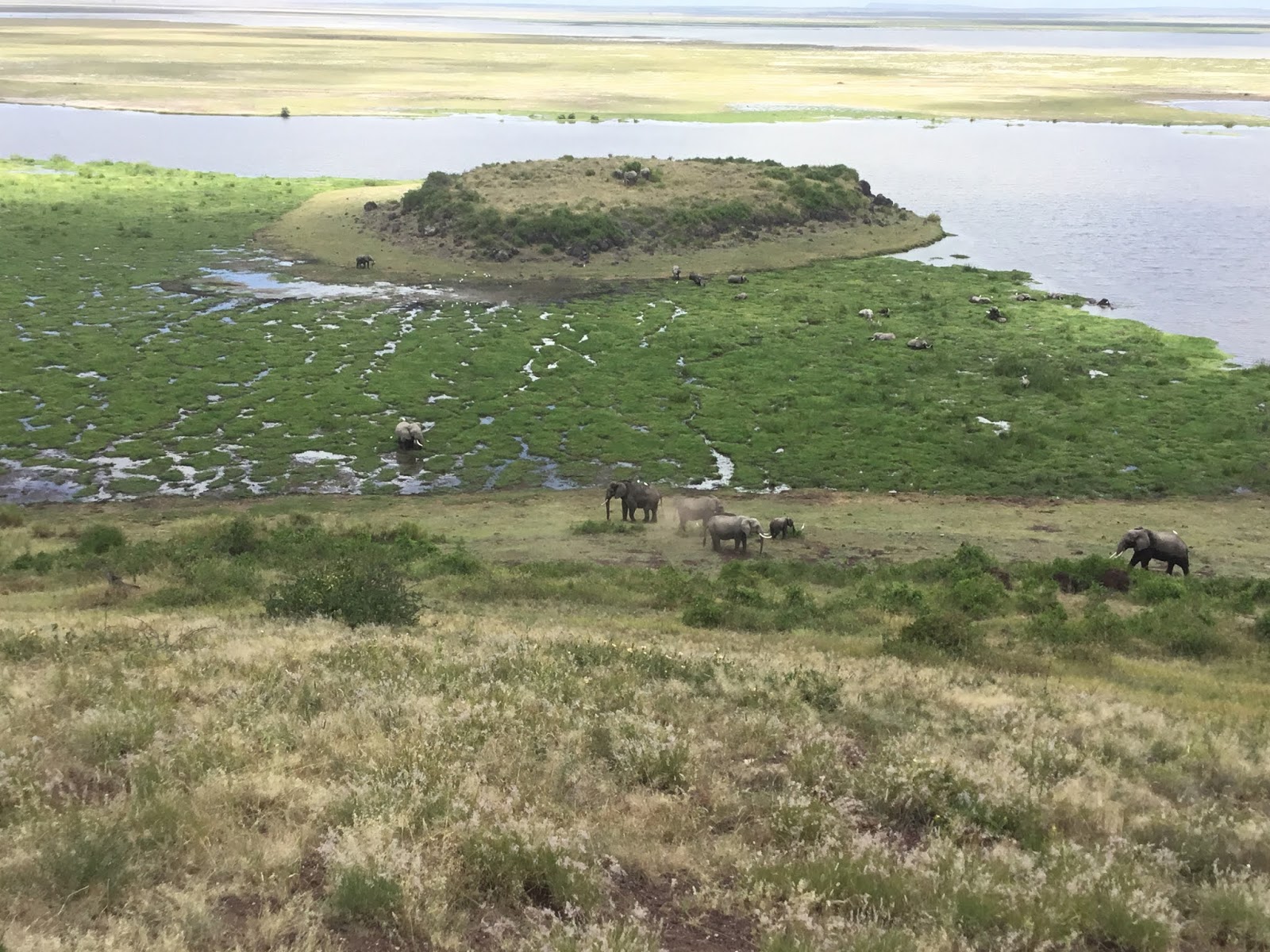
 The marshlands
 The little island in the marshlands
 Home to a large herd of elephants
 On top of observation hill.
 The birds are iridescent colours.
 A little information about the park
 Observeration Hill
 We were very close to the elephants, lots of babies.
 Walking to the marshland
 Our trek up to Observation Hill.
 The elephants cross this deep marshland to go back and forth across to the island.
 Having a good feed, lots of food about.
Some facts about Kilimanjaro 

Whilst we were up on the observation Hill, we each witnessed an amazing sight. On the small island was a mother elephant with two older calves and two babies that appeared to be twins, she wandered up and down the shore to work out, where it was best to cross. The four of us were watching and thought she is not going to bring the tiny babies across the deep marshland, is she?
There was also another elephant not fully grown coming near so she chased it off.
 After about 10mins, the mother entered the water with the two babies and the two older ones behind. We observed this wonder of nature for a full hour, whilst having lunch, losing sight of the twins, then they would reappear at her side or under her ears.
The mother led the way, eating as she was slowly making her way across, this was observed through my binoculars, (would have loved to have the professional photographer here). The twins would appear up near her ears, then go under, the two older calves at the back of the mother, also helped by pushing them along. When they all appeared on the shore we clapped and was so excited to witness such an event. We were also very pleased that the twins made it.
When we told our guide who chose not to walk up the hill, he did not believe that they were twins! We were trying to convince him otherwise, but still doubted us.
On leaving the marshland, we spotted an elephant research vehicle, so stopped and asked about the elephants and if they were twins, yes they were, one week old and the only third pair to be born in 50years, how lucky were we, even our guide was amazed. They also live on the island, so that may have not been their first crossing.


The bird life in this area is magnificent, during the wet season water birds may be found within the swamps and after the rains, it is a common sight to see large flocks of flamingo wading in the pools of water below the mountain. We had a very full day and spotted loads of animals, no lions, but plenty of elephants, ganu’s, huxbeest, gazelles, hippos, cape water buffalos, birds, bustards, storks.
A very enjoyable day was had by all. More adventures to follow, next day we travel to Taita Hills.

Thursday, 20 February 2020

African adventure in Kenya.

The middle of February saw us fly to Kenya, via Perth and Johannesburg. The flight to Perth is 4 1/2hours, we had a 2 hour wait, then a 10 1/2hr flight to Johannesburg.
We had to wait 5 hours for our connecting flight to Nairobi. On arrival we were met by our driver and transported to our hotel, to rest overnight, before we begin our tour.
After 28hrs on leaving home, it was an early meal and early to bed.
The next day we met our driver/guide, Debit who navigated the very heavy traffic of Nairobi and we made our way to the Masai Mara National Park.
This drive was about 5 hours, we drove through the Rift Valley, the bread basket of Africa.
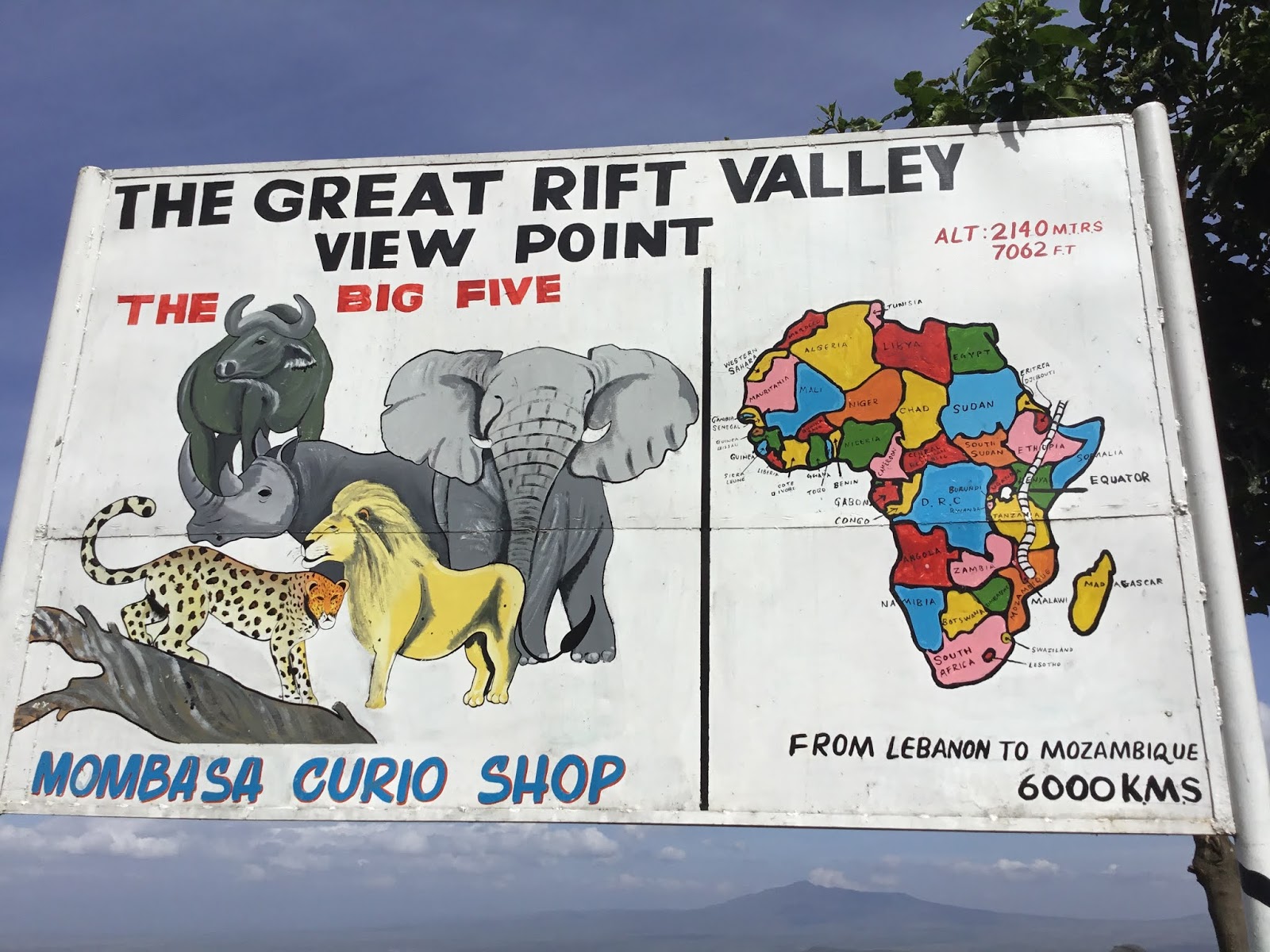
The great Rift Valley is part of the Afro-Arabian rift system which stretches from Jordan in the north to Mozambique in the south. Nowhere is it more defined than in Kenya where in places, it is as wide as 80km (50miles) across the escarpment walls rising up to 600 metres (2,000feet)
The views from some of these walls are spectacular.
 We travelled through the scenic plains towards Narok and the Mara National Reserve.
 View of the Rift Valley
 Lots of curio shops

After our viewing, we drove down the valley to have a very good cup of Kenyan coffee.
We arrived into our lodgings, which is situated in a conservancy bordering the Masai Mara game reserve.
 Mara Sentrim, our accomodation
 Glamping style with full amenities.

The pool area.
After we settled in and had lunch, we went on a game drive for 4 hours in the Masai Mara game reserve.
The grass was very long and green, hard to see many animals clearly, we were lucky with the serval cat being on the road.
 This serval cat was walking along the road, apparently they are hard to spot, we were lucky to see one, at first we thought it was a leopard, often mistaken for one.
 We also saw four cheetahs, lying in the grass, we were allowed to go by two cars with the permission of the research team.
The four cheetahs
Crown primrose birds.
 A lone giraffe
A Masai Mara sunset, gorgeous on a Valentine’s Day.
The Masai Mara lies along the border of Tanzania, it is bisected by the Mara River and boarded on the western boundary by a spectacular escarpment. The film “Out of Africa” was filmed in this area.
The Mara is an area of 2700sq km (690sq.miles) and is the home of the greatest variety and largest number of wild animals in Kenya.
It is also the northern extension of Tanzania’s famous Serengeti national parks and the animals wander freely across man-made borders.


 Our abode for the night
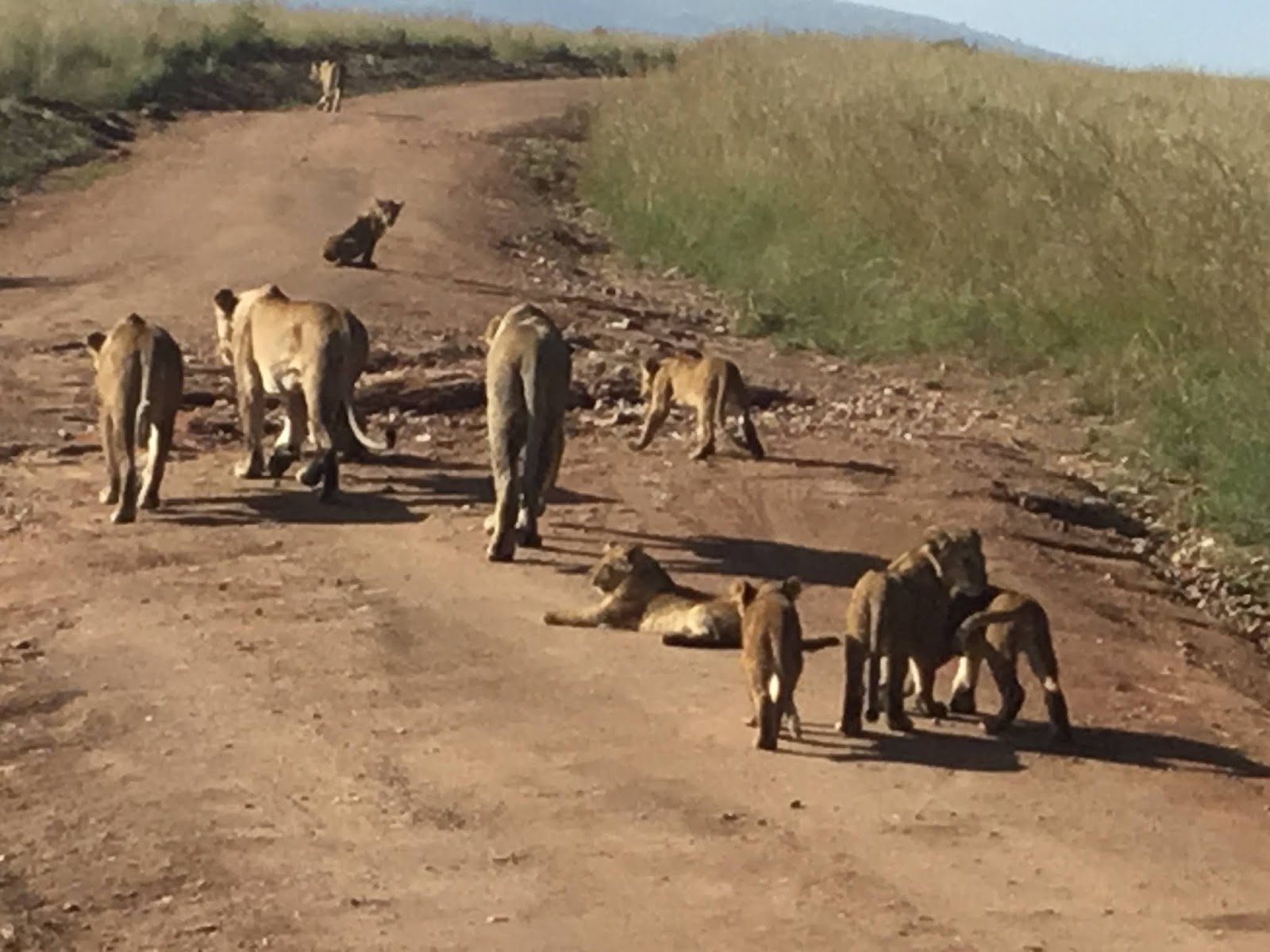
 Part of the big five, we were luck enough to see 6 lioness and 7 cubs, just dawdling along the road, so excited to watch them, they were not scared of the cars. Everyone rushed to the spot to catch a look, I have several photos of course as well as a video, too see them this close was a bonus.
 All the safari vehicles, word gets out very quickly.
 A Masai giraffe, they are browner than the South African giraffe.
Leopard in the tree, this was an adventure to get this photo, let me begin an explanation, not sure how it was spotted, but it was in a tree in the distance, to get closer, money had to change hands and two cars at each time were allowed a photo stop. In the Masai Mara National Park, a heavy fine applies if you go off the tracks and make your own tracks. To get close to the leopard we had to cross a large embankment!!!!, here lies the drama....... we got stuck on the embankment, to get off after several attempts, the help of other game drivers, we had to pushed with a big bull bar to try and go forward, after several rams and skidding of tyres etc, we event
gotta  free, I might add we were the talk of the park.


 This is the point at the Mara River that borders Tanzania and Kenya
 Distance described to both countries.
 A hippos jaw on the Mara River
 Our ranger guide Will, who took us on an escorted tour of the Mara River.
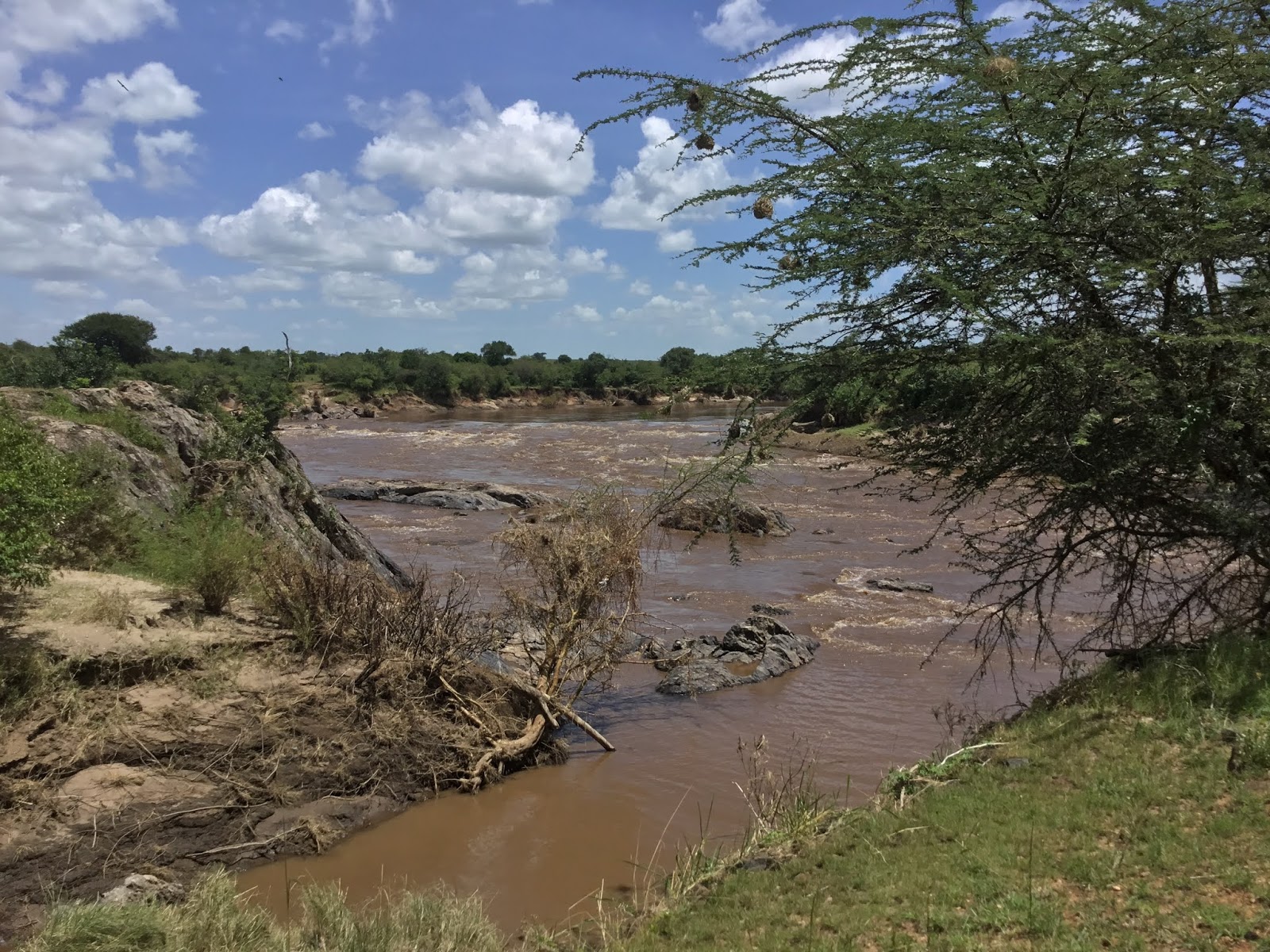
 The Mara River where the migration happens every year in July. This is where they cross. During the migration the whole reserve may be dotted with herds of wildebeest. A count during migration in the 80’s revealed over a million wildebeest, half a million gazelles and over 200,000 zebra residents in the reserve at any one time. In the crossing of the Mara River, which flows very fast, the loss of animals can be up to 2,000 or more and the river just stinks with dead animals. The wildebeest usually follows the zebras. They cross to give birth and return to the greener grass in September /October.
 The Mara River
 Hippos live along this river as well as crocs.
See how fast the river flows.


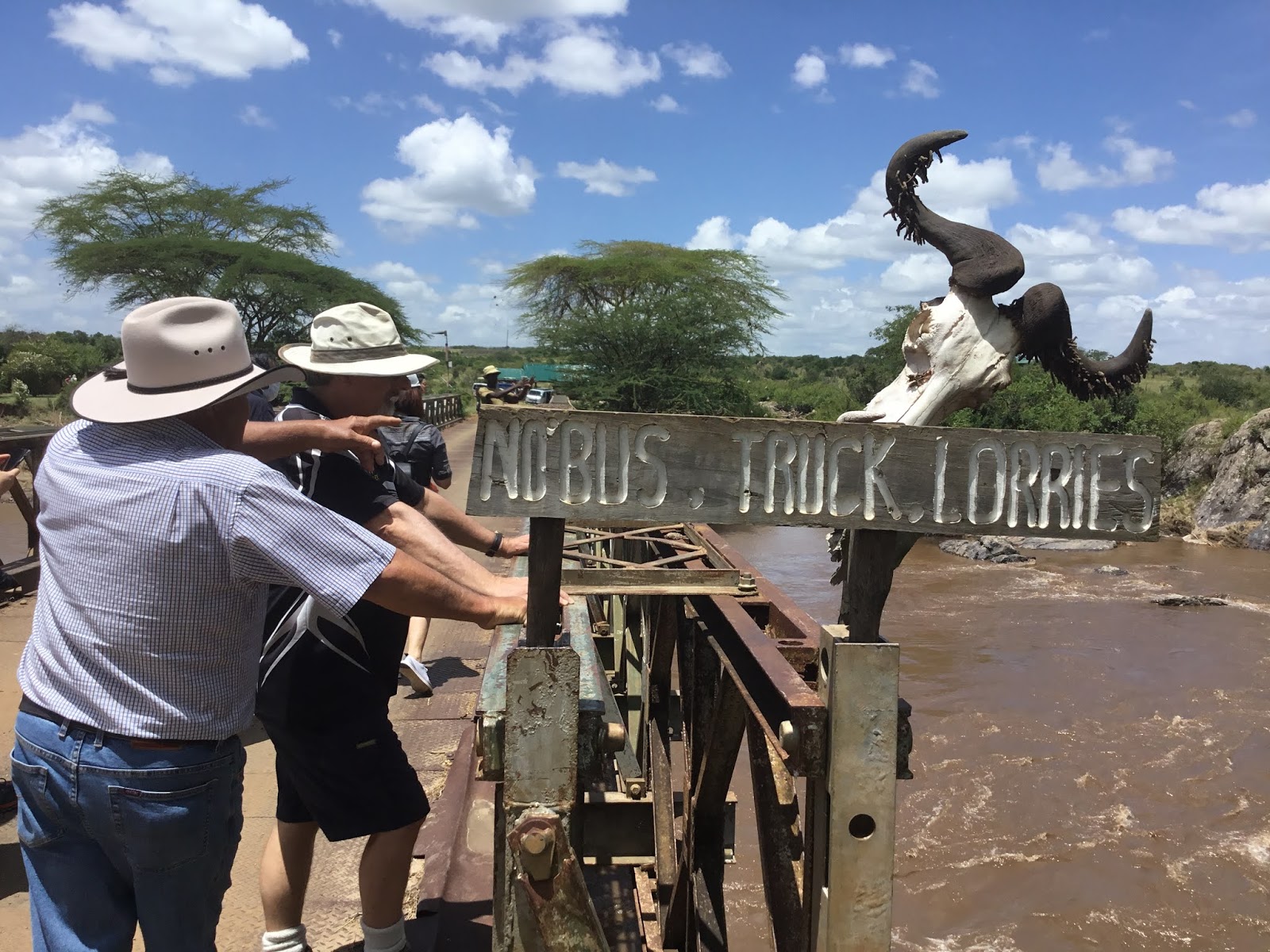
 The Mara River signpost.
 The two Tony’s discussing the river and crossing.
 Huge crocs in the river, they feed on all the carcasses.
 The river, how fast it flows.
 Hippos in the river.
This photo was captured by a professional photographer in Masai Mara reserve, one of the cheetahs we seen of the four, helped bring down a topi on the 20th February.

We had two wonderful days in the Masai Mara Game Park, very different landscape to Kruger National Park. More adventures to follow with our visit to the Masai Mara village.


>